



By Richard E. Miller
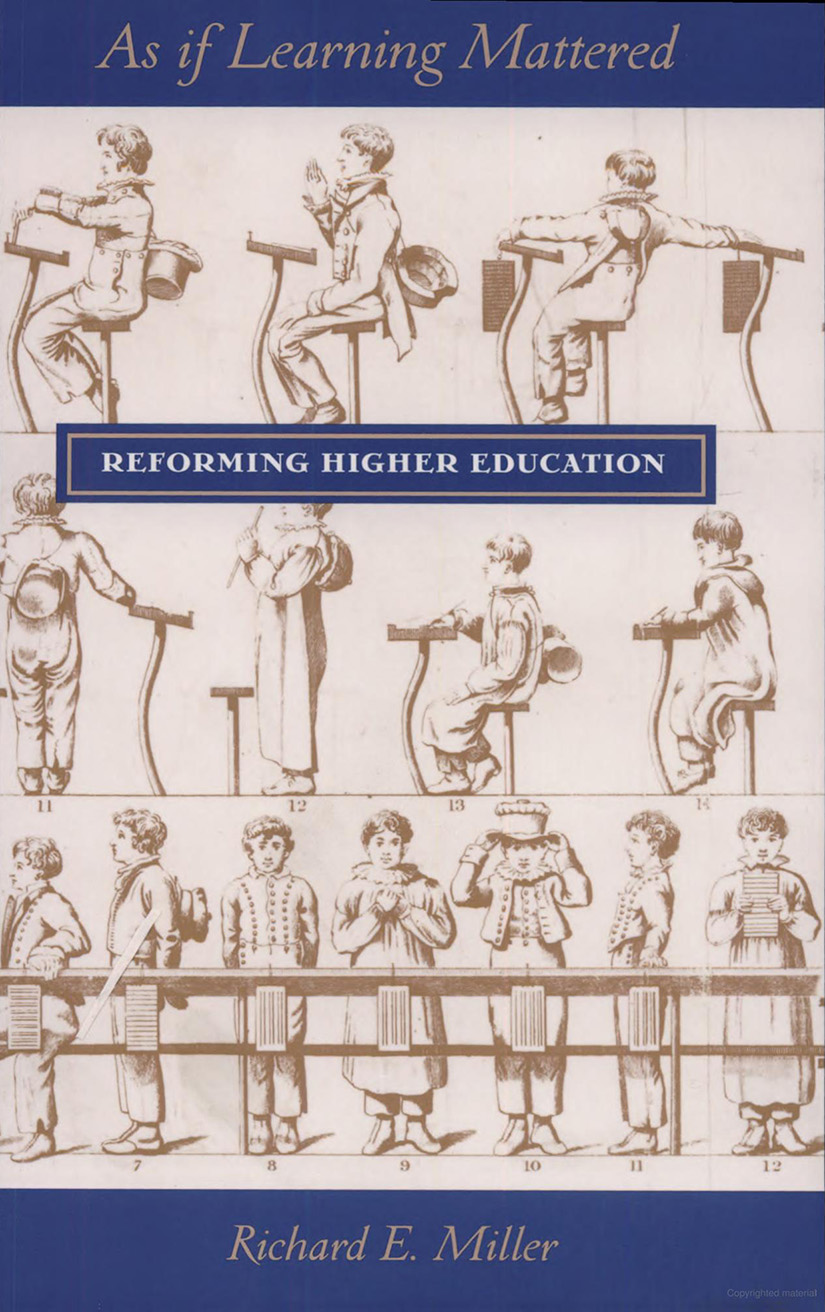 Published in 1998, when the culture wars had reached the end of their second decade, Richard E. Miller’s As If Learning Mattered explored why higher education has been particularly resistant to reform. Unraveling stereotypes about conservative, liberal, and radical reform efforts, Miller looked at what actually happened when theories about education were put into practice. As If Learning Matters raises critical questions: What did Matthew Arnold do as a school inspector to promote the study of “the best that has been thought and said in our time”? Why did the Great Books program fail at the University of Chicago and succeed at a small liberal arts college in Annapolis, Maryland? How did Tony Bennett and others involved in the radical work of British Cultural Studies test their students’ knowledge of popular culture? How did ethnographers of schooling respond when they encountered students with apparently racist attitudes?
By grappling with such questions, As If Learning Mattered focused attention on how students, teachers, and administrators experience life in the academy as they negotiate the daily realities of reading lists, writing assignments, grading practices, and funding crises. By juxtaposing what educators think about social change with what these same people actually do in the classroom, Miller successfully identified new ways to generate locally effective reform objectives for the university as it retools for the information age.
Reflection: Read Richard E. Miller’s reflection on the 25th anniversary of the publication of As If Learning Mattered
