

 The Association for Writing Across the Curriculum and the WAC Clearinghouse sponsor awards that recognize contributions to the WAC community through scholarship, service, and achievement. Nominations are solicited prior to each International Writing Across the Curriculum Conference, and awards winners are announced at the conference.
The following members of the WAC community have been designated as Distinguished Fellows of the Association for Writing Across the Curriculum. This award recognizes distinguished scholars (i.e., scholars in field for at least 15 years) who have made significant contributions to the field of WAC through scholarship, service, and achievement. This is an award that continues beyond the year in which it was made.
North Carolina State University
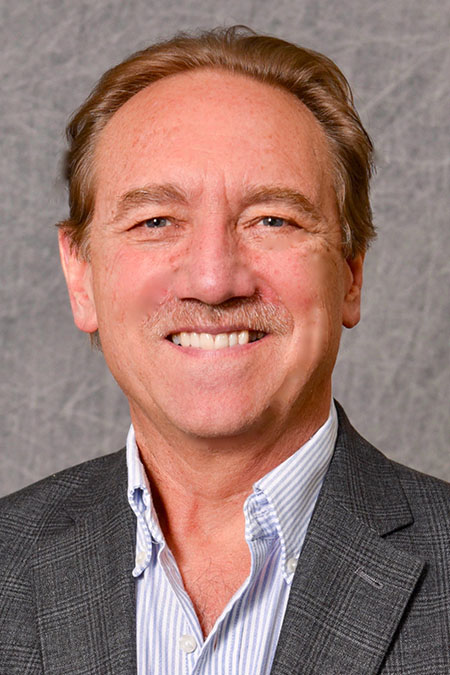
It is our pleasure to nominate Dr. Chris Anson, Distinguished University Professor at North Carolina State University, for Distinguished Fellow of the Association for Writing Across the Curriculum, an award he richly deserves for his career-spanning contributions to WAC, WID, and Communication Across the Curriculum. Just a cursory glance at his current c.v. testifies to his many contributions to WAC/WID and writing studies more generally. He has published 19 books and over 140 journal articles and book chapters in many of the leading publications in the field, and many of these scholarly contributions have focused on issues in disciplinary discourse, WAC/WID programs, interdisciplinary communication, WAC pedagogy, and WAC assessment. Several of the books he has authored, co-authored, or edited—notably Writing Across the Curriculum: An Annotated Bibliography (1993), The WAC Casebook: Scenes for Faculty Reflection and Program Development (2002), and 75 Readings Across the Curriculum: An Anthology (2006)—have become landmark, go-to texts for WAC faculty development over the last two decades.
WAC research also comprises a great many of Dr. Anson’s publications in professional journals and edited collections. Just a small sampling of his single- or co-authored publications includes “The Future of Writing Across the Curriculum: Consensus and Research” (1993), “Toward a Multidimensional Model of Writing in the Academic Disciplines” (1998), “Teaching and Learning a Multimodal Genre in a Psychology Course” (2005), “Using National Survey of Student Engagement Data and Methods to Assess Teaching in First-Year Composition and Writing Across the Curriculum” (2015), “Crossing Thresholds: What’s to Know About Writing Across the Curriculum?” (2015), “Handing Over the Reins: Ownership, Support, and the Departmentally-Focused Model of Communication Across the Curriculum” (2018), and “Talking About Writing: A Study of Key Terms Used Instructionally Across the Curriculum” (2019). It is particularly telling that one of his earliest professional presentations at the 1991 Midwest MLA conference was entitled “WAC at Century’s End: A 30-Year Study of What Other Disciplines Say About Writing,” and that nearly 30 years after that presentation, Dr. Anson was invited to be a leader at the 2019 WAC Summer Institute. Those professional presentations bookend a career of dedication to and impact on WAC/WID studies. He has worked tirelessly to advance and improve WAC programs through presentations and faculty development workshops; as he says on his website, he “has given over 700 conference papers, keynote addresses, and invited lectures and faculty workshops across the U.S. and in 33 other countries.” It’s hard to imagine someone more influential and more deserving of being recognized as a Distinguished Fellow of the Association for Writing Across the Discipline than Dr. Anson.
University of California Santa Barbara
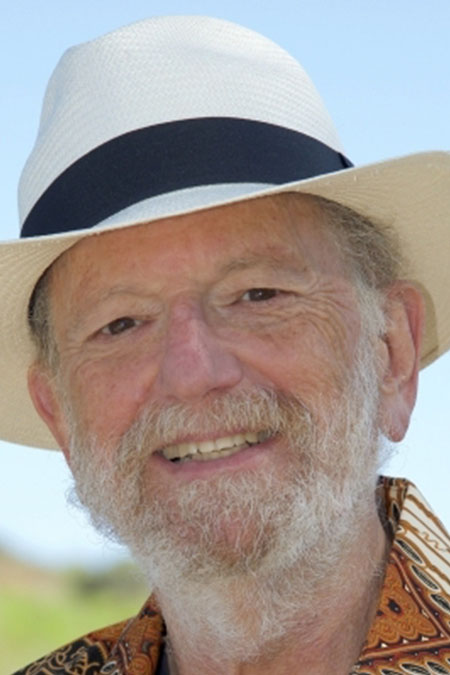
We are pleased to nominate Charles Bazerman, Distinguished Professor of Education at the University of California Santa Barbara, for selection as a Distinguished Fellow of the Association for Writing Across the Curriculum. Dr. Bazerman was one of the earliest to engage detailed research in writing across the curriculum, with his 1981 article “What Written Knowledge Does: Three Examples of Academic Discourse.” He went on to study the evolution and variety of the experimental research article in the sciences and social sciences, eventuating in the award winning 1988 book Shaping Written Knowledge: The Genre and Activity of the Experimental Article in Science (University of Wisconsin Press) along with numerous articles and chapters before and after.
Dr. Bazerman’s textbooks The Informed Writer (1981; 1985; 1989; 1992; 1995) and The Informed Reader (1989) (both Houghton Mifflin) broke ground in providing discipline-specific instruction and materials. His co-authored (along with Joseph Little, Teri Chavkin, Danielle Fouquette, Lisa Bethel, and Janet Garufis) Reference Guide to Writing Across the Curriculum (WAC Clearinghouse and Parlor Press, 2005) has become a standard reference guide on WAC, and in 2016 was translated into Spanish, allowing it to then become an effective guide to developing programs in Latin America. He also co-edited with David Russell Landmark Essays in Writing Across the Curriculum (Hermagoras Press, 1994). His theories of genre arose in an attempt to understand disciplinary writing and have been widely used in WAC publications and pedagogy. He has edited or co-edited works that have been important venues for WAC work, including the series Rhetoric, Knowledge and Society and Reference Guides to Rhetoric and Composition, and the volumes Textual Dynamics of the Professions; Writing Selves, Writing Societies; and Genre in a Changing World. He also founded or collaborated in the formation of a number of organizations that have provided venues for the presentation and discussion of discipline-focused writing research, including the Research Network Forum, the International Society for the Advancement of Writing Research, the Latin American Association for Reading and Writing in Higher Education, and the WAC Clearinghouse.
His work has received numerous awards, including the CCCC Exemplar Award; NCTE James R. Squire Award; Doctor Honoris Causa, University Nacional de Cordoba, Argentina, The National University of Entre Ríos, the National University of Río Cuarto, and the National University of Villa María in Argentina; Best Book of 1999 in History of Science and Technology; American Medical Writers Association John P. McGovern Award. He has had visiting professorships and Fulbright fellowships in China, Chile, Brazil, Portugal, Nepal, Denmark, Czech Republic, and France. He is also a Kentucky Colonel (joining esteemed colleagues Mae West, W. C. Fields, and Charlie Chaplin).
Dr. Bazerman’s scholarly, professional, and teaching accomplishments are truly impressive and we believe he is supremely worthy of the recognition afforded through designation as a Distinguished Fellow of the Association for Writing Across the Curriculum.
Seattle University
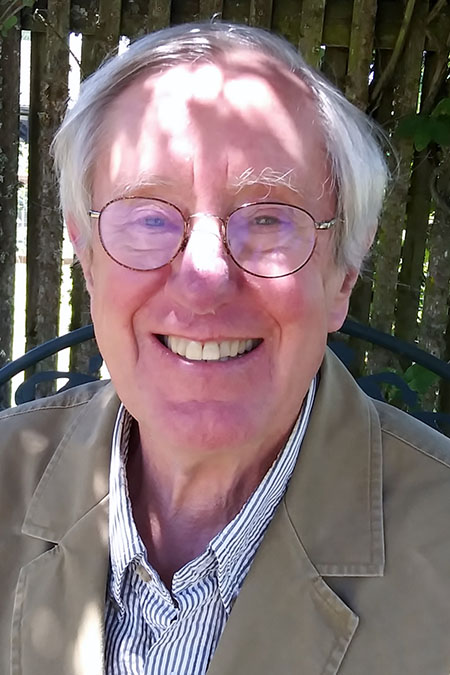
We are pleased to nominate John Bean, Professor Emeritus at Seattle University, as a Distinguished Fellow of the Association for Writing Across the Curriculum. Dr. Bean was an early advocate for WAC, conducting faculty workshops at institutions around the country and internationally on writing and critical thinking. He is the author of a widely used and cited book on writing and critical thinking entitled Engaging Ideas: The Professor’s Guide to Writing, Critical Thinking, and Active Learning in the Classroom, which has been translated into both Dutch and Chinese. This innovative book has influenced many faculty over the years as a valuable resource for their teaching.
Dr. Bean has also published numerous articles on writing and writing-across-the-curriculum in edited collections and leading journals such as College Composition and Communication and WPA. He has written several important textbooks. And, in 2001, he presented a keynote address at the first annual conference of the European Association of Teachers of Academic Writing at the University of Groningen in The Netherlands. You can learn more about Dr. Bean’s distinguished career at https://www.seattleu.edu/media/college-of-arts-and-sciences/aboutthecollege/faculty-staff-cv/John-Bean-CVb4c4.pdf.
We hope you will find his foundational and influential scholarly work worthy of selection as a Distinguished Fellow of the Association for Writing Across the Curriculum.

Oregon State University
Please accept our nomination of Vicki Tolar Burton for selection as a Distinguished Fellow of the Association for Writing Across the Curriculum. Dr. Burton established and directed the Writing Intensive Curriculum (WIC) program at Oregon State University in 1993. An early pioneer in innovative WAC programming, she has long served as a model for initiatives many of us now take as a given, including profiles of writing in the disciplines, faculty teaching-with-writing awards, student writing-excellence awards in the major, and thesis/dissertation bootcamps that introduce participants to contemplative practices. Her co-produced video Writing Across Borders has been enormously influential for both WAC and writing center researchers and administrators.
Dr. Burton has published cross-disciplinary research on literacy, rhetoric, pedagogy, and WAC in CCC, College English, Rhetoric Review, and Across the Disciplines. However, she is perhaps best known for her historical and archival research on women’s writing and rhetorical literacy, including Literacy in John Wesley’s Methodism: Reading, Writing, and Speaking to Believe and similarly focused articles. Reflecting her abiding concern with diverse literacies and rhetorical practices, she is author of a forthcoming chapter, “Ethical Writing in the Disciplines,” in After Plato: Rhetoric, Ethics, and the Teaching of Writing. A longtime member of the International WAC Network Board of Consultants, she has continued her professional service as member of the WAC Summer Institute planning committee. She has most recently been instrumental in establishing an Oregon community college WAC network.
For these reasons, Dr. Burton is well qualified to become a Distinguished Fellow of the Association for Writing Across the Curriculum. We strongly recommend her inclusion in this group of scholars.

Universidad de Buenos Aires
Paula Carlino (Ph.D. in Psychology, Universidad Autónoma de Madrid, 1996) more than anyone else has introduced Writing across the Curriculum across Latin America at both the undergraduate and graduate levels and estabished Higher Education Writing in the Disciplines as a major area for research and program development.
She is Principal Investigator at the Consejo Nacional de Investigaciones Científicas y Técnicas – CONICET, works with the Instituto de Lingüística de la Universidad de Buenos Aires, and is Professor of Teacher Formation at the Universidad Pedagógica Nacional (UNIPE). She also formed and directs GICEOLEM (Grupo para la Inclusión y Calidad Educativas a través de Ocuparnos de la Lectura y la Escritura en todas las Materias, Group for the Inclusion and Educational Quality for Reading and Writing in all Subjects), which has carried out much fundamental research and trained generations of teacher-researchers. She has been the moving spirit and plenary speaker at endless conferences around Latin America and the world. She has been invited to speak, lead seminars and consult in Argentina, Brazil, Colombia, Costa Rica, Chile, Ecuador, Spain, France, México, Panamá, Perú, Puerto Rico, Dominican Republic, Uruguay, Venezuela and the US. Her initial tranche of 15 impressive publications in 2002-2004 opened up for Argentina and Latin America the entire issue of writing in the disciplines as she examined the current situation of who taught or didn’t teach writing at the Argentinian universities, what the needs of the students were, and how the failures of writing education served as major obstacles in undergraduate and graduate careers. Those initial paers also introduced to Latin America the research and practices of writing across the curriculum then current in the US and Australia. She has since collaborated with her many mentees in investigating the reading and writing processes across many subject areas. She has also published many Works that provide practical guidance for developing university writing programs, which given the structure of universities in Latin America must occur within specfic disciplinary faculties. Her 2005 book Escribir, leer y aprender en la universidad (Writing, Reading, and Learning in the University) won the prize for the Best Book in Education in Teacher Education in Argentina. Her CV (https://www.aacademica.org/paula.carlino/cv.pdf) is over ninety pages long.
North Carolina State University
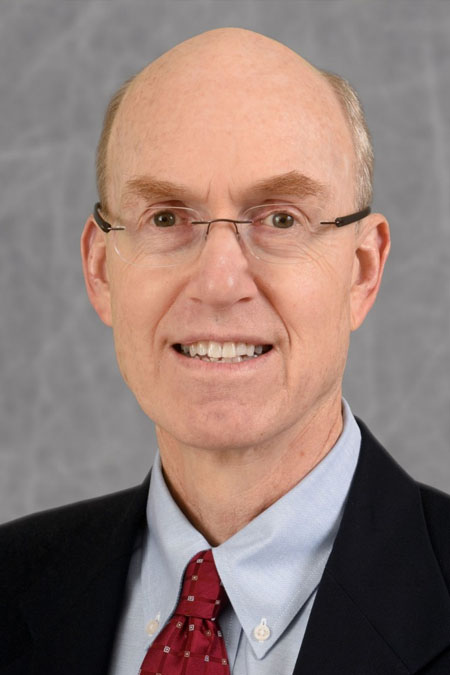
Michael Carter is a highly regarded scholar, educator, and advocate for the teaching of writing across the curriculum. Over the past 41 years, he has made substantial contributions to writing across and in the disciplines, and his impact on students, colleagues, and the broader academic community is undeniable.
Mike’s scholarship is marked by a deep commitment to interdisciplinary inquiry and an unwavering dedication to improving writing pedagogy across diverse contexts. He has published extensively on topics ranging from the rhetorical analysis of scientific discourse to the role of writing in STEM education, and his work has been widely cited and celebrated within and beyond the field of writing studies. In 2007 he received the Richard Braddock Award for his highly influential article published in College Composition and Communication, “Ways of Knowing, Doing, and Writing in the Disciplines.” In 2008 he received the NCTE’s award for Best Article on Pedagogy or Curriculum in Technical or Scientific Communication for “Writing to Learn by Learning to Write in the Disciplines” (co-authored with Miriam Ferzli and Eric N. Wiebe). He was successful in obtaining an astonishing $5.5 million in grants that generated widely adopted materials such as the influential LabWrite: A National Web-Based Initiative to Use the Lab Report to Improve the Way Students Write, Visualize, and Understand Science (supported by the National Science Foundation). His dozens of presentations and workshops across the United States and in many other countries have helped to inform scholars and educators on a wide range of writing- and communication-related topics. Mike’s research has not only advanced our understanding of writing as a critical component of disciplinary learning, but also provided valuable insights into how writing instruction can be integrated into a range of academic contexts.
Mike’s contributions to the teaching of writing across the curriculum are equally impressive. He helped to establish the first departmentally-focused writing and oral communication program in the United States, the Campus Writing and Speaking Program, at North Carolina State University, and was its interim director for two years as a national search was mounted for a permanent director. Subsequently he served for eight years as its Associate Director. The program has had a significant positive effect on the role of writing and oral communication across NC State’s large and diverse curriculum, which supports 34,000 students, and led to NC State being included multiple times in U.S. News and World Report’s list of universities with the best programs for writing across the curriculum. The model of communication across the curriculum that Mike helped to establish has influenced many other universities and is documented in Anson and Flash’s recent collection, Writing-Enriched Curricula: Models of Faculty-Driven and Departmental Transformation (WAC Clearinghouse and University Press of Colorado, 2021), for which Mike wrote the Foreword. For thirteen years, Mike served as Associate Dean of the Graduate School at NC State, where he continued his implementation of WAC and WID using the departmentally-focused model that he helped to establish.
As a teacher, mentor, and curriculum designer, Mike has worked tirelessly to help students develop their writing skills and learn how to communicate effectively within their respective fields. His courses became known for their rigor, creativity, and commitment to student-centered learning, and his students have consistently praised him for his ability to foster critical thinking and intellectual curiosity. Mike’s approach to teaching is grounded in his belief that writing is not just a tool for communication, but also a means of generating knowledge and fostering collaboration across disciplines. In 2006 he received the Ephraim I. Schechter Award for Excellence in Undergraduate Assessment at NC State and, in 2002, he received the University’s Award for Outstanding Contributions to Undergraduate Education. Finally, Mike’s commitment to the field of writing studies extends beyond his scholarship and teaching. He has served on numerous editorial boards, professional organizations, and accreditation committees, and has conducted external reviews and consultations at universities such as Wayne State, Miami, Iowa State, and King Saud University in Saudi Arabia. In addition, Mike has been a leading voice in efforts to make writing instruction more accessible and responsive to the needs of all students.
For these reasons and many more, I believe that Mike Carter is an exceptional candidate for AWAC’s Distinguished Fellow Award. His contributions to the field are profound and his impact on students, colleagues, and the academic community at large is immeasurable. I whole-heartedly endorse his nomination and encourage the committee to consider him for this prestigious award.
Hong Kong Polytechnic University
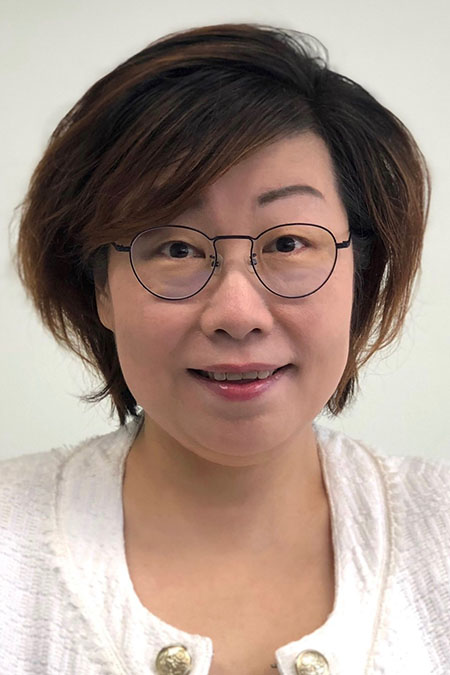
It is a particular honor for us to nominate Julia Chen for designation as a Distinguished Fellow of the Association for Writing Across the Curriculum. Dr. Chen is Director of the Educational Development Centre at The Hong Kong Polytechnic University (HK PolyU). In that capacity, she is also an indefatigable advocate for WAC and EAC (English Across the Curriculum) at HK PolyU, among Hong Kong’s several tertiary institutions and, more broadly, in the Asia Pacific region. She is a primary driving intellectual and administrative force behind the highly successful biennial international EAC Conferences, which HK PolyU hosted in 2016 and 2018 and will host virtually in May 2021. While the EAC conference is hosted at PolyU with Dr. Chen as the driving force, she is not the sole leader. Rather, at the outset, supported by a government grant for educational innovation, she formed a consortium of five other tertiary institutions with the initial goal of reintroducing WAC to Hong Kong, but this time as a writing and speaking initiative to fit its trilingual context.
Dr. Chen has been the Director of HK PolyU’s Educational Development Centre for more than four years, a role that involves overseeing the Centre’s mission of promoting a culture of learning and teaching excellence, grounded in impactful pedagogies, the innovative use of educational technologies, and scholarly approaches to learning and teaching. Dr. Chen’s role provides a comprehensive platform from which to lead and promote the EAC initiative at her institution and across the consortium. Further, she has continued to be successful in winning government funding as well as institutional support for projects developed under the EAC umbrella, including, for example, a five-university project on co-developing a mobile app for supporting students in writing their capstone projects across disciplines.
There is not room here to describe Dr. Chen’s many accomplishments, but suffice it to say that in both her EAC and EDC leadership roles she has been instrumental in working with her colleagues across the curriculum and across institutions to develop and employ best practices in language-based teaching and faculty development. Dr. Chen is a true visionary in the WAC/EAC diaspora, embodying the best practice, theory, and commitment for students who learn in complex linguistic environments.
For her strong record of sustained and impressive contributions to the field, we recommend Dr. Chen for designation as a Distinguished Fellow of the Association for Writing Across the Curriculum.

The McCallie School
Nomination 1. We are delighted to nominate Pamela (Farrell) Childers as a Distinguished Fellow of the Association for Writing Across the Curriculum. Dr. Childers has dedicated four decades to helping other secondary educators develop WAC programs, gaining international prominence in doing so, and often partnering with postsecondary programs. Her national involvement in WAC began in the early 1980s with her co-leadership of a two-day workshop at the annual NCTE conference. In that workshop, she introduced secondary teachers to WAC. At that point she had already started and directed a WAC-based writing center at a public school in New Jersey, where she taught English, launched an innovative history-English four-year team teaching program for at-risk students, and founded the creative writing curriculum for a state-designated performing arts program. While starting a second WAC and writing center program at a Tennessee independent school, she initiated a team-taught senior science seminar and writing fellows program. She also began consulting internationally with secondary schools and served as president of the National Writing Centers Association (now IWCA).
Dr. Childers has presented workshops and keynotes at IWAC, CCCC, IWCA, EATAW and other international conferences. Her scholarly works include her dissertation, Creating a Model WAC Program for Secondary School Teachers, plus four books (see wac.colostate.edu/books), WAC articles and columns, chapters in edited collection, and editorship of a special issue of Across the Disciplines. Her work has often been co-authored with students, cross-disciplinary scholars, and colleagues at all academic levels. Her WAC service includes the IWAC and current AWAC Board of Consultants, the WAC Clearinghouse Editorial Board, and K-12 WAC Series Editor. Through her work on WAC in secondary schools, WAC-based writing centers, and WAC partnerships, Dr. Childers continues to influence educators internationally. For these reasons, we strongly recommend her for selection as a Distinguished Fellow of the Association for Writing Across the Curriculum.
Nomination 2. I nominate Dr. Pamela (Farrell) Childers for the AWAC Distinguished Fellow Achievement Award. I am a science teacher who has known Pam since the ’90s when we began team teaching a senior science seminar, co-presented at WAC conferences in Charleston till Auburn, co-authored and edited WAC articles, chapters, and a special issue of Across the Disciplines. Dr. Childers has been a WAC scholar, provided WAC service to others, and created innovative WAC programs for four decades, focusing primarily on WAC in secondary schools, WAC-based writing centers, and WAC partnerships. The topic of her doctoral dissertation was Creating a Model Writing Across the Curriculum Program for Secondary School Teachers. She has started WAC programs in public and independent secondary schools, directed WAC-based writing centers, consulted with schools from Australia to Bermuda on all academic levels, co-led one of the first two-day WAC workshops at NCTE in the 1980s, and has continued to give regional, national and international WAC presentations and workshops with colleagues across disciplines, at all academic levels and with her students. Her dedication to WAC includes scholarly publications, frequently co-authored with students, cross-disciplinary scholars, and colleagues at all academic levels, that include four books (see WAC Clearinghouse publications), chapters in many scholarly books, special WAC issues, articles and columns in Academic.Writing, Across the Disciplines, and WAC Journal.
Dr. Childers’ service to the WAC community also includes serving on the AWAC Board of Consultants as well as on the WAC Clearinghouse Editorial Board and as a Series Editor and decades of innovative programs.
Cornell University
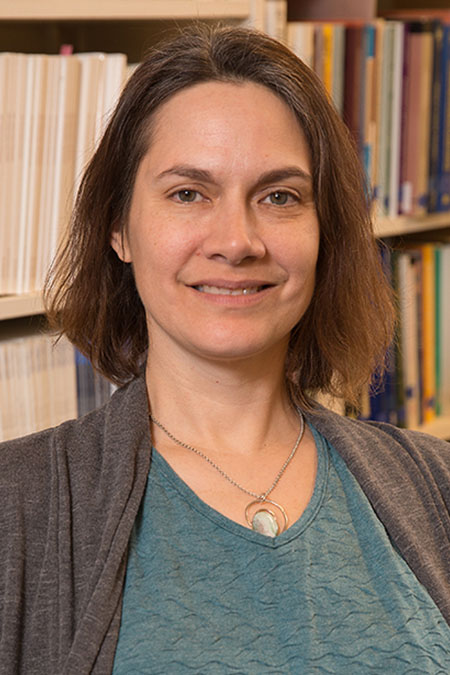
Nomination 1. Michelle Cox is a truly remarkable scholar, administrator, and innovator whose achievements and WAC leadership at the national level are hard to describe in a brief letter of nomination. As the inaugural director of the Cornell English Language Support Office, she currently works with international graduate students across disciplines, which led her to co-found (with Nigel Caplan) the Consortium on Graduate Communication (CGC), which comprisies WAC, writing center, and TESOL administrators/practitioners. Almost concurrently, she was co-leading the formation of the Association for Writing Across the Curriculum, a logical outgrowth of the CCC WAC Standing Group, which she also co-founded. Prior to those foundational activities and as a member of the International Network of WAC Consultants, she led a committee in writing the influential Statement on WAC Principles and Practices. Even earlier, she co-founded NEWACC, the Northeast WAC consortium and established a WAC program at Bridgewater State University.
In 2011, Dr. Cox co-edited (with Terry Myers Zawacki) a special issue of Across the Disciplines on WAC and English L2 Writing which led to the collection WAC and Second Language Writers: Research toward Developing Linguistically and Culturally Inclusive Programs. These publications marked WAC’s re-engagement with the TESOL field, her particular area of expertise, in what might be called a second wave of WAC/ESL-focused scholarship (after Ann Johns and Lucille McCarthy, for example). Turning towards graduate writing concerns reflective of her Cornell position, Dr. Cox co-edited Supporting Graduate Writers: Research, Curriculum, and Program Design. And perhaps most notably for the WAC field, she co-authored (with Jeff Galin and Dan Melzer) Sustainable WAC: A Whole Systems Approach to Launching and Developing WAC Programs, which is already widely cited and will likely join early WAC program publications by McLeod et al. on the shelves of must-read books for WAC administrators. In addition to these many accomplishments, Dr. Cox serves on the Clearinghouse Editorial Board and edits the English Second Writing pages.
For these reasons, we strongly endorse Michelle Cox for selection as a Distinguished Fellow of the Association for Writing Across the Curriculum.
Nomination 2. I am nominating Michelle Cox for Distinguished Fellow of the Association for Writing Across the Curriculum. Michelle has played a central role in the WAC movement as a scholar, a leader of national organizations, and a WPA. Her scholarship has shaped our thinking on WAC and multilingual writers, WAC and program development, and graduate support for writers across disciplines. She has published two well-received co-edited collections on second-language writing and WAC, WAC and Second Language Writing: Research toward Linguistically and Culturally Inclusive Programs and Practices and Reinventing Identities in Second Language Writing, and she was co-editor of aspecial issue of Across the Disciplines focused on second language writing. Michelle’s co-authored monograph, Sustainable WAC: AWhole Systems Approach to Building and Developing Writing Across the Curriculum Programs, is the first work of WAC scholarship to present a theory and methodology for developing WAC programs. She played leadership roles in the CCCC WAC SIG and Standing Group, the International Network of Writing Across the Curriculum Programs, the Consortium on Graduate Education, and the Association for Writing Across the Curriculum. Her leadership roles in these last two organizations are especially notable, as she is the co-founder and co-chair of the Consortium on Graduate Education, and she was a founding member of AWAC and the first Chair of AWAC. Michelle is also on the editorial boards of the WAC Clearinghouse and Across the Disciplines. As a WPA, she created a highly successful WAC program at Bridgewater State University, she led a multilingual student support program at Dartmouth, and she is currently the inaugural Director of the Knight Institute English Language Support Office of Cornell University.

Dartmouth
Professor Donahue has an impressive WAC-oriented CV (attached) and more than 20 years of WAC-related experience. In the US higher education context, she has served in multiple functions across writing programme designs from first year writing programmes, WAC programmes, WID programmes, and programmes for pursuing transfer to post-university writing development. But the core reason for the nomination is her work outside the US higher education arena and its impact on both helping transfer and adapt WAC/WID philosophies to higher education systems in Europe. This work has, however, had the double function of also introducing ideas, language awareness, and philosophies from European contexts to the US educational arena.
Donahue’s projects, workshops and publications testify to a long and deep WAC commitment within and outside the US. My two main reasons for the nomination, though, are two activities she has initiated that both have the signature potential of her work. The Dartmouth summer seminar, which she started with Charles Bazerman in 2011, has offered first of all a retreat for writing studies professionals to focus on their projects, collaborate via extended conversation and dialogue, and even start up new collaborative projects. More importantly, the seminar brings WAC-scholars together from around the globe and that enriched perspective on WAC is important. Her work with the CCCC standing group for International Researchers Consortium, while less ambitious in terms of time and the length of the retreat, has had very similar impact. To give up on the conference presentation format and design a workshop where papers are shared and read months before and discussed with engaged reader during a one-day workshop has proven to be a very effective concept. Since 2018 that workshop has not only attracted international scholars and their projects, but it has also been offered three times in Europe without any connection to the CCCC conference.
University of Minnesota
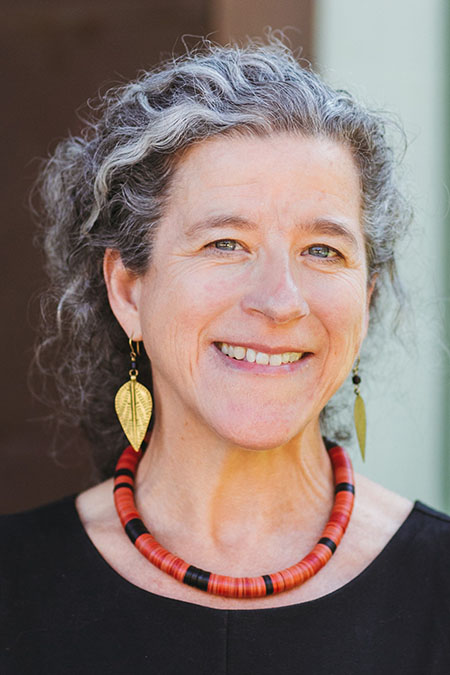
We are delighted to nominate Pamela Flash for selection as a Distinguished Fellow of the Association for Writing Across the Curriculum. She has supported effective writing and writing instruction within her home institution (the University of Minnesota) and in the larger WAC community for two decades.
She is an impressive scholar. Her publications and conference presentations focus primarily on methods for triggering changes in how writing and writing instruction are understood and practiced by faculty members and instructors within diverse departments and curricula. She is currently co-editing, with Chris Anson, a collection dedicated to the Writing-Enriched Curriculum model, or WEC (forthcoming, WAC Clearinghouse 2021). For this collection, she has contributed the first chapter entitled, “Writing-Enriched Curriculum: A model for making and sustaining change.” Her chapter, “From Apprised to Revised: Faculty in the Disciplines change what they never knew they knew,” in Kathleen Blake Yancey’s collection, A Rhetoric of Reflection (2016), has proven useful to developing WAC programs and to graduate seminars across the country. Her other publications have focused on modes of writing assessment and on forms of writing and writing instruction in fields like construction management, mechanical engineering, horticulture, and veterinary medicine.
Her recent presentations have focused on instigating and sustaining instructional change within academic departments. They include “Writing-Enriched Curricula: Integrating relevant writing instruction department by department” at the University of San Francisco (2019); “Writing-Enriched Curricula: Changing Faculty Approaches to Writing” at Chinese University of Hong Kong (2019), and “Writing-Enriched Curricula: Transformed Pedagogies, Sustained Change” at University of London (2017). She will also provide a plenary address, “WAC @ 50: Where are we now?” with Michelle Cox at the IWAC Conference at Colorado State University (2021). In addition, She has obtained funding for ambitious grant-funded projects related to WAC, including funding from the National Science Foundation and the Bush Foundation.
She has also provided significant service to the WAC community. She chaired the 2014 IWAC conference, “Shifting Currents/Making Waves” and she now serves as co-chair of the IWAC committee (with Michael Pemberton) as part of the AWAC Executive Board. In 2018, she designed and chaired the first International WEC Institute, a multi-day event that attracted WAC personnel and faculty members from 34 institutions (a second institute is scheduled for Spring 2021). And finally, in 2018 and 2019, she co-designed and hosted the national STEMwrite Institute, a multi-day, NSF-funded institute attended by teams composed of WAC consultants and teams of faculty members from the Biological Sciences.
Her most direct form of service to the national and international WAC community can be seen in her approach to conducting site visit consultations. Because her primary objective in conducting these visits is to support the work WAC colleagues are doing (and might do in the future), her preferred approach is investigative and collaborative. She involves herself directly in WAC/WID conversations with faculty members, administrators, and WAC colleagues and then thinks pragmatically with these stakeholders about what might be achieved and how that work might be accomplished.
Pamela Flash is among the leading innovators in WAC, as can be seen in the development of the Writing-Enriched Curriculum (WEC) model. WEC supports the curricular integration of relevant writing instruction into undergraduate curricula by putting change in the hands of faculty, defining writing capaciously as visual marks conveying meaning, shifting the role of the WAC consultant from writing expert to facilitative thinking partner, and working intentionally and regularly with multiple channels of assessment. More than 60 departments at the University of Minnesota are now engaged with the WEC model, and multiple institutions across the country are adapting WEC on their campuses. She has shared processes and materials with WAC consultants on dozens of campuses and has traveled to their sites to launch and coach WEC processes.
For her work as a scholar, innovator, and leader within the field, we strongly recommend Pamela Flash for selection as a Distinguished Fellow of the Association for Writing Across the Curriculum.

University of Vermont

Florida Atlantic University
Without a doubt, Jeffrey Galin is well qualified to be a Distinguished Fellow of the Association for Writing Across the Curriculum, and we are pleased to nominate him. Dr. Galin brings two decades’ worth of WAC service and scholarship to the WAC community. His experience in the areas of intellectual property and technology have also been important as he handled the by-laws and articles of incorporation for the 501-c(3) status of AWAC, the first membership-based national organization for WAC as a field. He also has been one of the leaders in planning and leading the WAC Summer Institute and forming the CCCC WAC Standing Group. He began his work as a WAC Consultant at the annual CCCC WAC SIG, and he has presented and co-led workshops at both CCCC and IWAC conferences since 2000. His vision of the future of WAC includes his active support of WAC-GO, the graduate organization of WAC, where he was appointed to their Advisory Board.
Dr. Galin’s extensive service to the professional includes serving as a member of the editorial board of the WAC Clearinghouse, a member of the executive committee of the Association for Writing Across the Curriculum, and as chair of CCCC WAC Standing Group, among other advisory positions. Dr. Galin has also published extensively on WAC, including co-authored articles with colleagues in the areas of chemistry, intellectual property, and technology in The WAC Journal and many other professional journals. His latest book with Michelle Cox and Dan Melzer, Sustainable WAC: A Whole Systems Approach to Launching and Developing Writing Across the Curriculum Programs (NCTE, 2018), is a seminal work for current and future WAC program directors.
At Florida Atlantic University, he developed and directs the University Center for Excellence in Writing on four campuses and WAC Program, and has implemented a new Writing Enriched Curriculum. He indeed is an innovator and WAC visionary. For these reasons, we recommend Dr. Galin for selection as a Distinguished Fellow of the Association for Writing Across the Curriculum.

Coventry University
Dr. Ganobcsik-Williams has a long track-record of important work and outstanding academic leadership in European writing development and the work of introducing as well as adapting US WAC ideas and philosophies into the UK and the European educational scene. She has been running the Centre for Academic Writing at Coventry university since 2004. The centre is a good example of adjusting writing centre pedagogy to new contexts and environments and adapting to the European Higher Education Arena. As a European writing studies professional she has been active in IWCA, EWCA and EATAW. She was on the EATAW board from 2007 to 2017 and has been an ex-offcio member since 2017. Together with other EATAW board members, she started and developed the Journal of Academic Writing and has been an editor for it since 2009. JoAW was established as a journal for EATAW members and has hosted special issues for the EATAW conferences since 2011.
An additional example of her substantial influence and impact on European writing development is the development and research of two post-graduate programmes for writing development pedagogy in Europe. There is a one-year programme largely oriented towards to the UK-scene and a two-year programme that has attracted many European teacher-scholars. The topics in the programme are central to the field with “Teaching and Supporting Academic Writing”; “Contextual Issues in Developing Research Communication”; “Writing Centre and Writing Programme Development and Management” and “Supporting Research-Active Staff with Research Communication.”
University of Michigan
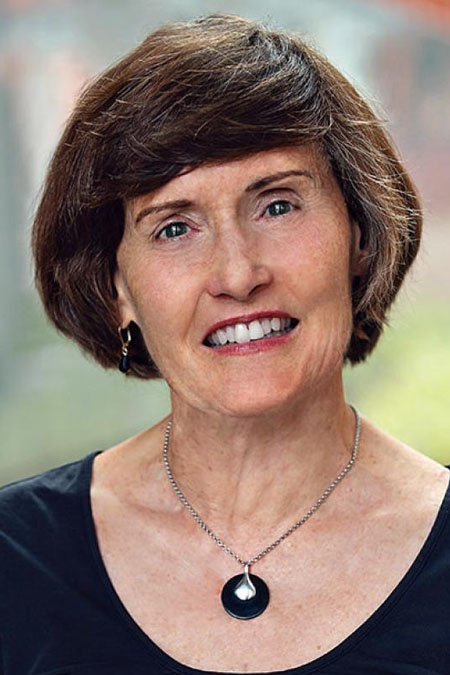
I am pleased to nominate Dr. Anne Ruggles Gere, professor of English and Education at the University of Michigan, for Distinguished Fellow of the Association of Writing Across the Curriculum. Dr. Gere is well known in writing studies for her impressive list of leadership positions, including a former president of NCTE, former Chair of College Composition and Communication, and past president of MLA. Perhaps less well known to those in Writing Across the Curriculum are her many scholarly contributions to our field and her mentoring of doctoral students who then go on to make meaningful WAC contributions themselves. I’ll detail both of these areas shortly, but first I want to describe her University of Michigan programmatic accomplishments.
Before stepping down in 2019, Dr. Gere developed and directed the Sweetland Center for Writing, a comprehensive, cross-curricular center that not only oversees the first-year and cross-college advanced writing requirements and the writing minor but also serves students and faculty across the university through a writing tutoring center, a writing fellows program, specialized support for multilingual and international students, and a cross-disciplinary faculty-facing Fellows Seminar offering consultations, workshops, and funding for research on writing.
Dr. Gere’s most recent scholarship is evidence of the cross-disciplinary reach of the faculty-facing services, particularly collaborative research on writing. From just 2017 to the present, for example, I counted on her CV twenty-two multiply-authored articles with STEM faculty in Chemistry, Engineering, and Biology, published in both writing studies and science journals. Here are just two examples: Gere, A.R., Knutson, A.V., & McCarty, R., (2018). Rewriting disciplines: STEM students’ longitudinal approaches to writing in (and across) the disciplines.” Across the Disciplines, 15(3), 63-75. And Moon, A., Gere, A. R., Shultz, G. V. (2018). Writing in the STEM classroom: Faculty conceptions of writing and its role in the classroom. Science Education, 102(5), 1007-1028.
In addition and as an example of her generous mentoring, Dr. Gere frequently co-authors on cross-disciplinary topics with her past and present doctoral students, often on large-scale corpus research involving writing development and writing assessment. Of particular interest to those of us in WAC is the 2019 edited collection Writing Development in Higher Education: A Longitudinal Study, which I had the opportunity to review in manuscript form. The volume includes chapters by current and former graduate students. Of the latter, a number have gone on to lead WID-focused writing programs, e.g. Zach Lancaster, who inaugurated a WAC initiative at Wake Forest and is now mentoring assistant professor Dr. Alisa Russell in that role.
Before closing, I want to mention two other Sweetland Center faculty development initiatives— MWrite, which assists instructors in implementing writing-to-learn pedagogies in large introductory lecture courses across the curriculum and the Topics in Writing Podcasts. The podcasts, developed and overseen by Dr. Gere, feature hour-long interviews with invited experts in writing studies, including many WAC scholars, e.g. Charles Bazerman, Dan Melzer, Marty Townsend, Mike Palmquist, Linda Adler-Kassner, Liz Wardle, Carl Withaus, and me (honored to be in such good company). A gift to our field, the podcasts are offered open access at https://lsa.umich.edu/sweetland/projects/topics-in-writing-podcast.html
Chalmers University of Technology
Zurich University of Applied Sciences
Governors State University
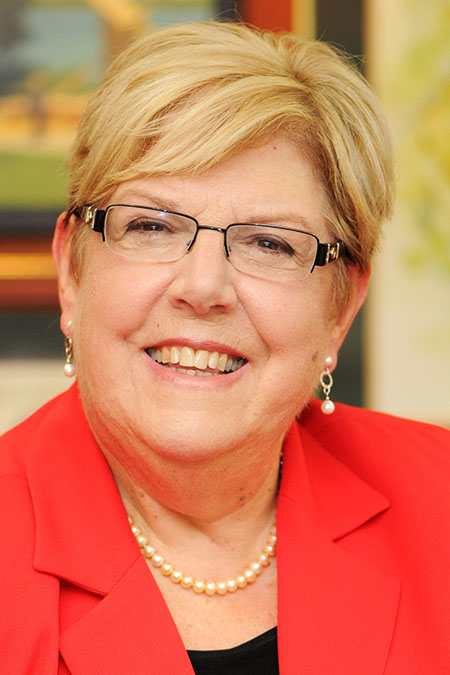
We are delighted to nominate Elaine Maimon for selection as a Distinguished Fellow of the Association for Writing Across the Curriculum. Dr. Maimon is one of the founders of the WAC movement, having played a central role in the development of WAC as an educational movement. The program she developed and led at Beaver College (now Arcadia University) served as a pioneering effort that influenced the development of WAC at countless colleges and universities during the 1980s and 1990s. Based in part on the Carleton Plan developed by Harriet Sheridan, an approach that employed both writing seminars and student writing consultants, Dr. Maimon’s work provided important elaborations that have continued to shape WAC as an educational movement in subsequent decades.
Dr. Maimon’s work on WAC has involved far more than program development. Following initial work at Beaver College that brought key WAC writing studies scholars to work with faculty—among them Harriet Sheridan, Edward P. J. Corbett, Donald McQuade, Harvey Weiner, John R. Hayes, Linda Flower, Lynn Bloom, Richard E. Young, and Nancy Sommers—Dr. Maimon obtained funding from the National Endowment for the Humanities to disseminate writing across the curriculum nationally, a project that involved a 1983 national conference on writing in the humanities, and to engage Philadelphia-area high schools in establishing their own WAC initiatives. Dr. Maimon subsequently became a key player in national efforts to establish WAC, serving as a consultant at numerous colleges, universities, and secondary schools as well as publishing widely on WAC and writing studies.
Following her work on WAC (or perhaps continuing it), Dr. Maimon turned to institutional leadership. She served as Associate Dean of the College at Brown University., as Dean of Experimental Programs and tenured Professor of English at Queens College (CUNY), and as president of Arizona State University West, University of Alaska-Anchorage, and Governors State University. Her most recent book, Leading Academic Change: Vision, Strategy, Transformation (2018), sets an agenda for essential changes necessary for institutions to educate the New Majority (first-generation, students of color, adults, and military veterans).
Dr. Maimon’s foundational contributions to the development of WAC as an educational movement and her continuing efforts as a higher-education leader provide clear evidence to support her selection as a Distinguished Fellow of the Association for Writing Across the Curriculum. We strongly recommend her inclusion in this group of scholars.
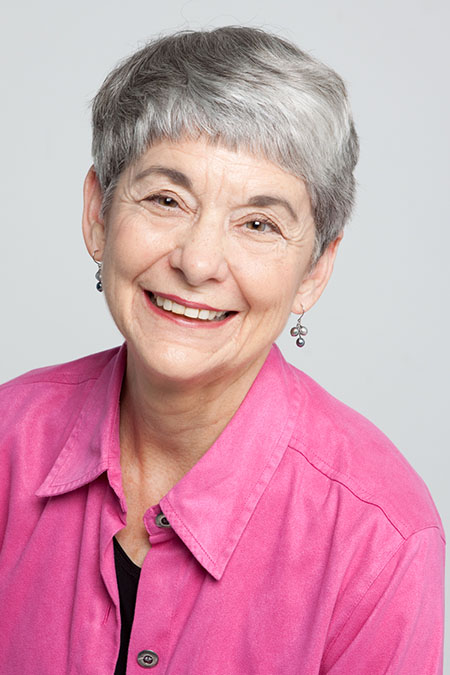
University of California Santa Barbara
We are honored to be able to nominate Susan H. McLeod, Research Professor and Distinguished Scholar at the University of California Santa Barbara, as a Distinguished Fellow of the Association for Writing Across the Curriculum. Dr. McLeod has been a foundational leader of the WAC movement, authoring or editing important scholarly work, serving as a frequent collaborator with colleagues across the country, and serving for more than a decade as the editor of the leading book series in WAC, the WAC Clearinghouse Perspectives on Writing series. It would be difficult to overstate the many contributions she has made to the WAC community and to scholarship about WAC during her long career.
Dr. McLeod conducted her first WAC faculty seminar in 1982 and her last in 2013. In between those years she conducted workshops and served as a WAC consultant at institutions inside and outside the United States, focusing on writing as a mode of learning as well as on helping students to learn the disciplinary genres of writing. Her co-authored book with Margot Soven, Writing Across the Curriculum: A Guide to Developing Programs (1992) is still being used by administrators and WAC directors, as is WAC for the New Millennium (2001). She is the author of several other books and numerous articles about WAC. She served for many years on the International WAC Network Board of Consultants and for more than two decades as a member of the editorial board of the WAC Clearinghouse.
You can learn more about Dr. McLeod’s work and career at https://www.writing.ucsb.edu/people/sue-mcleod. A cursory look will indicate that she is well deserving of the honor of becoming a Distinguished Fellow of the Association for Writing Across the Curriculum. We hope you will see fit to honor her with that designation.

University of California Davis
We are pleased to nominate Dan Melzer for designation as a Distinguished Fellow of the Association for Writing Across the Curriculum. Dr. Melzer is highly respected for his scholarly leadership in WAC both through professional organizations and his faculty appointments at California State University, Sacramento, where he served as Coordinator of University Reading and Writing, and at the University of California Davis, where he serves as the University Writing Program’s Director for First-Year Writing.
Melzer’s scholarship has been influential in WAC program development and college teaching. Assignments across the Curriculum: A National Study of College Writing (2014) presents the results of analysis of over 2,000 writing assignments from a cross-section of disciplines at 100 postsecondary institutions in the US. Sustainable WAC: Launching and Developing Writing Across the Curriculum Programs, coauthored with Michelle Cox and Jeff Galin (2018), introduces a much-needed, “whole systems” theoretical framework for program development. (“Eight ‘meaty’ chapters,” one reviewer noted.) Melzer’s substantive scholarly presentations at professional conferences such as CCCC, WPA, and IWAC have been particularly well received by WAC advocates working to develop, sustain, or expand institutions’ WAC programs.
Likewise, Dr. Melzer’s composition textbooks embody his commitment to WAC. Everything’s a Text: Readings for Composition, coauthored with Deborah Coxwell-Teague (2010), takes a WAC approach by including a range of texts from blogs to lyrics to advertisements to graffiti, coupled with a variety of open-ended projects, while Exploring College Writing: Reading, Writing, and Researching Across the Curriculum (2011) offers students an overview of academic discourse and an introduction to the purposes, audiences, and genres of writing across disciplines.
Dr. Melzer serves or has served on the Editorial Board of Writing Spaces and the WAC Clearinghouse and, early in his career, served as the News and Information Editor for The WAC Clearinghouse. He is also a board member of the International Writing Centers Association and the Northern California Writing Centers Association. Other notable contributions to the profession include NCTE policy analyst, manuscript reviewer for half a dozen scholarly journals, and president of the Northern California Writing Centers Association, along with numerous other activities. His articles appear in journals such as College Composition and Communication, Language and Learning Across the Disciplines, The WAC Journal, and Kairos: A Journal of Rhetoric, Technology, and Pedagogy, and his book chapters appear in scholarly collections issued by Parlor Press, Bedford/St. Martins, Boynton/Cook, and more.
These accomplishments, coupled with Dr. Melzer’s frequent WAC-based consultations and invited talks for secondary and tertiary institutions, strongly support his designation as a Distinguished Fellow of the Association for Writing Across the Curriculum.
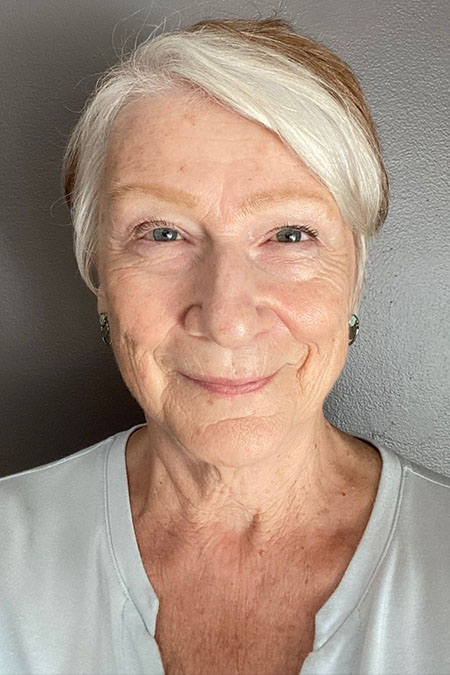
University of North Carolina Charlotte
We are delighted to nominate Joan Mullin, founding Chair of The Department of Writing Rhetoric and Digital Studies at UNC Charlotte and now emerita professor, to become a Distinguished Fellow of the Association for Writing Across the Curriculum. Dr. Mullen started her WAC career in 1987 by launching the University of Toledo’s Writing Center/WAC program. An early developer of WAC in-class consultants (1989), Dr. Mullin reenergized a moribund writing initiative at UT Austin, linking WAC student consultancy to faculty development (“Writing mentors as change agents …”). She hosted the 2008 IWAC conference, the first focusing on global WAC research. As department chair at ISU, she initated a design for campus WAC including feeder community colleges. Dr. Mullin found opportunity in developing an FYW program into a department, creating a WAC-infused major at UNCC.
The integration of WCs/WAC/composition (in WAC for the new millennium) frames publications with colleagues across disciplines and levels: in sociology, (“Integrating Writing and the Teaching Assistant to Enhance Critical Pedagogy”), geography: (“Constructing Each Other…”, Writing Across the Curriculum Programs for Colleges of Pharmacy: A Source Book), History (“. . .Formative Evaluation in a History Class”), high school, (“The Natural Connection. . .”—for which a retrospective is in process). The 2000s extended to the international (“Writing Programmes in the Art and Design Curriculum) and interrogated U.S. foundations ( Who owns this text? “Reconstructing Teacher Roles Through a Transnational Lens …”).
Dr. Mullin continues conducting program reviews and WAC planning, is involved with AWAC and the WAC Clearinghouse, and is co-editor of International Exchanges on the Study of Writing book series. As a result, she is able to unpack and interrogate definitions of “writing,” “research,” and “disciplines” in a truly impressive manner. She is among the leaders in WAC and is well deserving of the honor of being named a Distinguished Fellow of the Association for Writing Across the Curriculum.
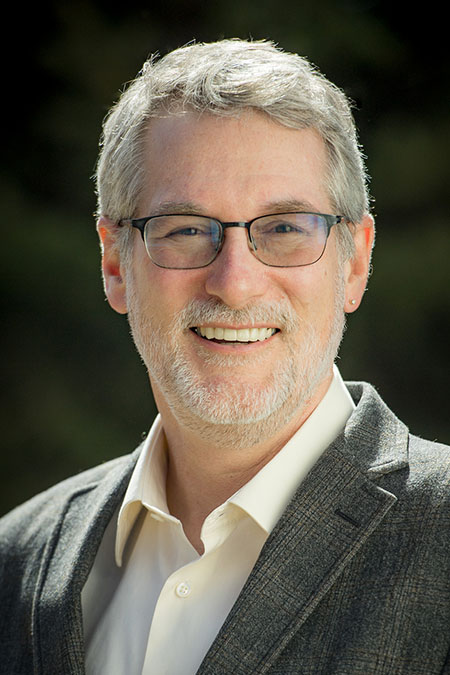
Colorado State University
Nomination 1. When I think about who has had the most profound impact on the field of WAC, Mike Palmquist is the first name to come to mind. Mike started the WAC Clearinghouse in 1997 to support the WAC program he was leading at Colorado State University. He quickly realized it could be useful beyond CSU and approached colleagues in the field to help with planning and development. These two impulses—to create something of use to the wider community and to collaborate with others—are hallmarks of his career of service to the field of WAC. Through Mike’s extraordinary leadership, the WAC Clearinghouse grows exponentially each year: as a storehouse of previously published material, as a publisher of original works, and as a platform for open-access scholarship of various kinds. And the number of collaborators has also grown exponentially. There are now six associate publishers, six section editors, 45 editorial board members, as well as the many editorial boards of the different journals, book series, and other affiliated groups. To shepherd such an immense enterprise takes vision, commitment and generosity. It is staggering to think of the breadth and depth of Mike’s impact—on the individuals he has worked with, mentored and empowered, but also on the many thousands (millions?) of people who have made use of the Clearinghouse—the researchers, administrators, teachers, and students—within and outside of WAC—whose teaching, learning, and professional lives have been indelibly enriched by the contributions of Mike Palmquist.
Nomination 2. We are pleased to nominate Mike Palmquist, Professor of English and University Distinguished Teaching Scholar at Colorado State University, for selection as a Distinguished Fellow of the Association for Writing Across the Curriculum. With his seemingly inexhaustible energy and unfailingly collaborative approach, we see him as a strong candidate for this award.
Dr. Palmquist’s scholarship has focused on writing across the curriculum, the effects of computer and network technologies on writing instruction, and new approaches to scholarly publishing. More recently, he’s become a leading voice in the burgeoning new field of writing analytics. In addition to publishing on these and other topics in student-oriented textbooks and in such WAC-friendly, peer-reviewed journals as College English, College Composition and Communication, Computers and Composition, and Written Communication, he is the founder and publisher of the invaluable WAC Clearinghouse.
His deep knowledge of scholarly publishing serves us all. The WAC Clearinghouse has evolved from a website where we could go for updates about conferences, jobs, and program links to an expansive online publishing house. Now, in addition to updates and links, members of the WAC community can (and do) go there to read and download whole multiple series of books and to peruse current and archived journals. His tireless work on the Clearinghouse has furthered WAC scholarship in countless directions and for countless national and international scholars and practitioners since 1997.
Dr. Palmquist has also provided extensive service to the WAC community, including serving as a member of the working group that founded AWAC, as a member-at-large of the AWAC executive board, and as a member of the editorial boards of several journals. In addition, he currently serves as the chair of the biennial International Writing Across the Curriculum Conference (IWAC). He took on this role at a time when the WAC community was experiencing substantial public dissension. Conversations on listservs and elsewhere were friction-filled, and some community members were expressing dissatisfaction with the field’s inattention to matters of social justice and inclusion. Perhaps as an antidote to the friction, and perhaps because this is just how he does things, Dr. Palmquist put together a massive advisory group to help plan the IWAC conference and he has consulted with this group at every step of conference planning from naming a theme and title, to wording the call, to structuring the sessions. Now, due to the Covid-19 pandemic, he is handling the next challenging set of circumstances—the conference’s postponement—with the same amount of collective-mindedness, generosity, and professionalism.
As was suggested above, with the WAC Clearinghouse Dr. Palmquist provides an innovative solution to multiple essential problems. Among the many questions this resource answers are: How can we create a sense of community among a dispersed set of individual practitioners and researchers? How can we archive and disseminate WAC scholarship to broad audiences? How can we maintain the integrity—and visibility—of newly published peer-reviewed journals at a time when hard copy publications are moving toward extinction. His innovative responses to these questions have benefitted us all since 1997 and will continue to do so into the future.
For these reasons, we strongly support Dr. Palmquist’s selection as a Distinguished Fellow of the Association for Writing Across the Curriculum.
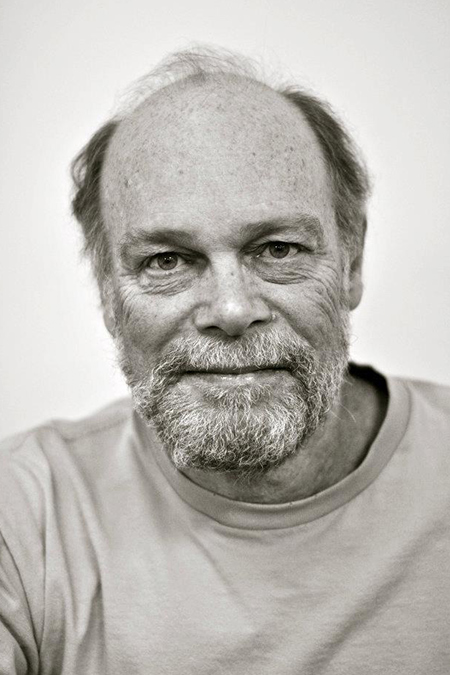
University of British Columbia
We are pleased to nominate Anthony Paré, Professor and Head of the Language and Literacy Education Department at the University of the British Columbia, for selection as a Distinguished Fellow of the Association for Writing Across the Curriculum. Dr. Paré is one of the pioneers of writing in the disciplines and its relation to workplace writing. He has been highly influential in the development of the teaching of disciplinary academic writing in Canadian Universities, and was one of the founding organizers of the Canadian Association for the Study of Discourse and Writing, which is essentially a WAC-focused organization.
As one of the lead researchers of the Canadian team that did the groundbreaking large study resulting in the influential volumes P. Dias, A. Freedman, A. Pare, & P. Medway, Worlds Apart: Acting and Writing in Academic and Workplace Contexts (Routledge, 1999) and A. Pare and P. Diaz (Eds.), Transitions (Hampton Press, 2000), Dr. Paré contributed to important, influential theoretical formulations of the role of writing in educational activity in contrast to the workplace. In particularly he looked intently at the writing in social work courses and related social work careers.
He has extended his research and practical work the context of doctoral education, and he led a nationally-funded research team on this subject. Of the many articles his group published on this subject, “Probing normalized institutional discourses about writing: The case of the doctoral thesis” was named the Best Research Article on Rhetoric, Writing Studies, or Discourse Studies for 2014 by the Canadian Association for the Study of Discourse and Writing.
In recognition of his sustained, pioneering work in writing in the disciplines, we recommend Dr. Paré for designation as a Distinguished Fellow of the Association for Writing Across the Curriculum.
Georgia Southern University
It is our great pleasure to nominate Michael Pemberton, Professor of Writing and Linguistics at Georgia Southern University, for AWAC’s Distinguished Fellow Award. Dr. Pemberton is widely recognized for his contributions to WAC/WID studies, especially for co-founding and co-editing the first WAC/WID journal in 1994, Language and Learning Across the Disciplines (now Across the Disciplines, published by the WAC Clearinghouse), and serving as its sole editor from 2004-2020. Since 2004, Dr. Pemberton oversaw the publication of nearly 60 issues of ATD, including 20 guest-edited special issues on topics such as WAC in community colleges, at rural and satellite campuses, in the fine and performing arts, in secondary schools, and in Australasia, amounting to well over 300 published articles and book reviews. In addition to publishing research by many of the most widely recognized scholars in WAC/WID, the journal has proven to be an invaluable resource for researchers around the world; its articles receive hundreds of thousands of views each year and thousands of downloads each month. Dr. Pemberton’s guiding vision and leadership of the journal has clearly contributed to its status as, arguably, one of the premiere scholarly journals in rhetoric and composition. In 2014, he founded a new book series at the Clearinghouse, Across the Disciplines Books, and continues to serve as the series editor, with four volumes published in the series to date.
Dr. Pemberton’s scholarly work also demonstrates his commitment to WAC studies. Several early columns in his award-winning “Writing Center Ethics” series focused on disciplinarity, such as “The Question of Expertise” (1995), “Content Is As Content Does” (1996), and “The Ethics of Content” (1999), but even more influential was his article “Rethinking the WAC/Writing Center Connection” (1995), originally published in the Writing Center Journal but reprinted multiple times in critical sourcebooks over the years. Additional WAC publications include single- and co-authored articles and chapters such as “Writing Across the Curriculum Encounters Asynchronous Learning Networks” (1997), “What Must Be Done to Ensure that College Students Communicate Well in Their Fields?” (2002), “Working Relationships between Writing Centers and Writing Across the Curriculum Programs” (2002), “Attitudes Toward Text Recycling in Academic Writing Across Disciplines” (2018), and “Rethinking the WAC/Writing Center/Graduate Student Connection” (2019). In addition to these publications, he has regularly presented papers on WAC at the CCCC, WPA, and IWAC conferences, led faculty development WAC workshops at numerous institutions, trained writing fellows at Georgia Southern, and been a member of the WAC Clearinghouse editorial board since 2005.
Lastly, his service to the profession and to WAC specifically has been enduring and significant. He co-chaired the IWAC Conference in 2012 (Savannah, GA) and has served on the IWAC Conference Committee ever since. He is also the recently appointed Associate Publisher for Scholarly Journals at the WAC Clearinghouse as well as the Co-Director of the CWPA Consultant-Evaluator Service, which provides professional consultations to writing programs and WAC programs across the country. For all these reasons, Dr. Pemberton merits the title of Distinguished Fellow of the Association for Writing Across the Curriculum.
Howard University
We are pleased to nominate Dr. Teresa Redd as a Distinguished Fellow of the Association for Writing Across the Curriculum. While at Howard University for several decades, she directed the WAC Program in the College of College of Arts & Sciences and served as founding director of the Center for Excellence in Teaching, Learning & Assessment (CETLA), which has become a model for similar programs at other institutions across the nation. She also co-designed the on-campus and online Writing Centers and the website for the WAC Program.
Dr. Redd has long been active in the field, participating in the first WAC conferences in the 1990s in Charleston, SC, and developing an innovative WAC programs at Howard University. She served for many years on the International WAC Network Board of Consultants and currently serves on the AWAC Board of Consultants. Throughout her lengthy and distinguished career, she has played an important role in the WAC community. Her most recent contributions have involved work in planning and facilitating AWAC’s 2019 and 2020 WAC Summer Institutes (the latter now being moved to 2021).
Dr. Redd has written two books, one of which has served as a school-wide anthology; served on three editorial boards of national journals, on the executive committee of CCCC, and on the advisory board of the HBCU Symposium on Rhetoric & Composition. As a nationally respected scholar and program administrator, she has helped many HBCU institutions launch or expand their writing initiatives. Her programs will serve as models for the future of WAC, especially with her pioneering WAC work that earned CETLA national recognition as a finalist for the Professional and Organizational Development Network’s Innovation Award. Dr. Redd has distinguished herself in the field of WAC in ways that will continue long after her current and future endeavors. She is a worthy candidate for Distinguished Fellow of the Association for Writing Across the Curriculum and we strongly recommend her selection.
Appalachian State University
I am writing to nominate Dr. Georgia Rhoades for the AWAC Distinguished Fellow Award. Her significant contributions to the field of WAC, through her scholarship, service, and innovative program administration, make her an excellent candidate for this award. In 2008, Rhoades proposed a Vertical Writing Model to Appalachian’s General Education Task Force, which implemented the new curriculum as part of an overhaul of our institution’s General Education Program. To assist in the development and support for the Vertical Writing Curriculum, Rhoades founded a Writing Across the Curriculum Program, which she directed, along with five WAC Consultants, also NTT Composition faculty. In recognition of this innovative program, the Vertical Writing Curriculum and the WAC program that supports it were awarded the CCCC Writing Program Certificate of Excellence in 2012.
In addition to Rhoades’ outstanding work on the Vertical Writing Curriculum, she also developed the WAC program as a site for collaboration and advocacy for non-tenure-track faculty, helping to transform their professional lives and shifting the culture of our campus to value a culture of writing. Drawing on the expertise of faculty on campus and bringing leading writing scholars regularly to do workshops, she created a faculty development program that was cited in the CCCC Award letter. She believes in investing in people and developing their expertise by supporting the NTT Composition faculty, who teach the first two courses in the curriculum, and the WID faculty who teach writing in the major.
Ten years ago, Rhoades organized the first Writing Across Institutions Conference, bringing community college writing faculty from across North Carolina to a free, day-long conference to learn from each other, have conversations with Appalachian’s faculty, and assist in redesigning community college curriculum to ease the transition for transfer students. Her professional service also includes developing an outstanding website that houses valuable resources for students, teachers, and writing professionals (http://www.wac.appstate.edu). The WAC Glossary, the WritingAbout Guidelines, and information on the Vertical Writing Model are incredibly valuablecontributions to the field.
Rhoades retired in December, but she remains connected to the field, doing program reviews ,giving International presentations, and publishing about the WAC program. She was recently appointed to the AWAC Board of Consultants.
Thank you very much for considering her nomination.
Iowa State University
We are pleased to nominate David Russell, Professor of English at Iowa State, for the honor of being named a Distinguished Fellow of the Association for Writing Across the Curriculum. Dr. Russell is among the leading scholars in WAC. He wrote Writing in the Academic Disciplines, 1870-1990: A Curricular History (1991), whose two editions still serve as foundational texts for WAC, as will its third edition (in process). This internationally influential text provided the intellectual and pedagogical evidence for establishing WAC programs in the 1990s and continues in that role. Tracking Dr. Russell’s publication history with Charles Bazerman (Writing Selves/Writing Societies) and David Foster (Writing and Learning in Cross-National Perspective) is to track the evolution of WAC theories and pedagogy and their influence on and by international scholarship and programs.
In addition to his initial history of WAC, Dr. Russell’s introduced the field to Vygotskian activity theory, changing how we think about genre in ways that can be traced through its production and reception. No one should forget his analogy of disciplinary writing to baseballs, footballs, and soccer balls, and it is Dr. Russell’s ability to move between high theory and application that account for his wide-ranging effect on the field. His recent turn to perception, cognition and phenomenology (“Why North American Writing Studies Ought to Reflect on Physiological and Phenomenological Approaches to Cognition”) shows his continuing involvement in the growth of the field and signals to others a necessary and not yet fully explored direction for WAC.
Dr. Russell’s service to the field extends to the numerous programs at which he’s consulted, his editorial, reviewer and editorial board positions (JBTC, CCC; TESOL Quarterly, AERJ, ATD, The WAC Clearinghouse). David Russell stands as one of WAC’s foundational influencers. We strongly support his selection as a Distinguished Fellow of the Association for Writing Across the Curriculum.
Carleton College
It is with great gratitude for her service to the WAC community that we write to nominate Carol Rutz, emeritus director of the writing program and senior lecturer at Carleton College, for designation as a Distinguished Fellow of the Association for Writing Across the Curriculum. Dr. Rutz has continued the excellent work of the first formal WAC program ever established in the United States, serving as a tireless champion of WAC at her own institution and on a national and international level. She is perhaps best known for her series of interviews with leading figures in WAC, which were published in The WAC Journal from 2002 to 2016 and which have continued under the leadership of Neal Lerner. Those essays will be re-released with updates and additional commentary in a book forthcoming from the Practices & Possibilities book series at the WAC Clearinghouse.
Beyond her well-regarded interview series, Dr. Rutz has made substantial scholarly contribution to the field. She has published essays on WAC in College Composition and Communication, Across the Disciplines, The WAC Journal, WPA Journal, and numerous edited collections. She has been a frequent presenter on WAC at major conferences. And she has served as a PI or Co-PI on grants totaling more than $1 million that have supported WAC initiatives at and beyond her college. In addition, Dr. Rutz has provided significant service to the WAC community, serving as a member of the editorial boards for the WAC Clearinghouse and The WAC Journal.
For her long record of sustained and impressive contributions to the field, we recommend Dr. Rutz for designation as a Distinguished Fellow of the Association for Writing Across the Curriculum.
LaSalle University
I exuberantly nominate Professor Margot Soven of LaSalle University for the honor of Distinguished Fellow of the Association for Writing Across the Curriculum. Dr. Soven, who is Professor of English at LaSalle, developed and has led the WAC program at LaSalle since the early 1980s, while also leading the Writing Center there for many years. In 2012, she received LaSalle University’s Faculty Service Award.
Even after forty years of vital service to writing at LaSalle, she continues to serve her institution in important and progressive ways. She directs the Writing Fellows Program, a key component of WAC, and through the office of the Dean of Arts and Sciences, she directs the entire Core Curriculum. Moreover, she continues to teach introductory and advanced writing courses and methods courses in the teaching of writing—as well as to have developed new courses in turn-of-the century American women writers and in post-fifties American writers.
She is the co-editor of several books that have become classics of the WAC literature, including Writing across the Curriculum: A Guide to Developing Programs (with Susan McLeod; Sage, 1992; Composing a Community: A History of Writing Across the Curriculum (with Susan McLeod; Parlor Press, 2006); and WAC for the New Millennium: Strategies for Continuing Writing Across the Curriculum Programs (with Susan McLeod, Eric Miraglia, and Christopher Thaiss; NCTE, 2001).
For thirty years she was a key contributor to the growth of WAC/WID nationally, not only through her publications, but also through service from the 1980s to 2015 as a member of the Board of Consultants of the National (then International) Network of WAC Programs. Each year she led or co-led program-development groups at the annual meetings of the Network at CCCC. She has served as a consultant, both formally and informally, to many developers of WAC programs across the US.
In addition to the books listed above, Professor Soven is the author, co-author, or editor of several other WAC-relevant books, including Write to Learn: A Guide to Writing across the Curriculum (South-Western Publishers, 1995); Writings from the Workplace: Documents, Models, Cases (with Carolyn Boiarsky; Allyn and Bacon, 1996; Teaching Writing in Middle and Secondary Schools: Theory, Research and Practice (Allyn and Bacon, 1999); What the Writing Tutor Needs to Know (Cengage, 2005); and Linked Courses for General Education and Integrative Learning: A Guide for Faculty and Administrators (edited, with D. Lehr, S. Naynaha, and W. Olson; Stylus Publishers, 2013).
For her many contributions to WAC scholarship and WAC program development nationally over many years, and for her varied, creative, and dedicated WAC-related service and teaching at La Salle University for more than forty years, Professor Margot Soven richly deserves the honor of being named Distinguished Fellow of the Association for Writing Across the Curriculum.
University of California Davis
We are pleased to nominate Chris Thaiss, Emeritus Professor of Writing Studies at the University of California, Davis, for selection as a Distinguished Fellow of the Association for Writing Across the Curriculum. Dr. Thaiss’s career encompasses not only a long and distinguished record of scholarly contributions to WAC but also an equally impressive record of service to the profession. He served as the Director of Writing Across the Curriculum at George Mason University for twelve years (1979-84, and 1991-98), and later directed both the University Writing Program (2006-11) and the Center for Excellence in Teaching and Learning (2012-15) at UC Davis. One of the foundational figures in the writing across the curriculum movement, Dr. Thaiss was the principal coordinator of AWAC’s precursor, the International Network of WAC Programs (INWAC) until 2016. His expertise in WAC is recognized internationally, and since 2000 he has given more than 200 invited talks and workshops on the teaching of writing and writing across the curriculum.
Books he has written, edited, or co-edited about WAC include Writing Science in the Twenty-First Century (2019), Writing Programs Worldwide: Profiles of Academic Writing in Many Places (2012); Engaged Writers and Dynamic Disciplines: Research on the Academic Writing Life (2006); WAC for the New Millennium: Strategies for Continuing Writing-across-the-Curriculum Programs (2001); The Harcourt Brace Guide to Writing Across the Curriculum (1997); Writing to Learn: Essays and Reflections on Writing Across the Curriculum (1983); Speaking and Writing, K-12 (1984); Language Across the Curriculum in the Elementary Grades (1986); and three writing texts (Pearson) for specific disciplines: Writing about Theatre (1999), Writing for Law Enforcement (1998); and Writing for Psychology (1999). He has also published a host of articles and book chapters about WAC including pieces in Composing a Community: The History of the Writing-across-the-Curriculum Movement, The WAC Casebook, Assessing WAC Programs, Programs and Practices: Writing Across the Secondary School, Writing Across the Curriculum: A Guide to Developing Programs, and Programs That Work: Models and Methods in WAC.
Dr. Thaiss is also the Principal Investigator for the International WAC/WID Mapping Project, a statistical and multimodal study of programs in writing in and across disciplines in higher education on six continents. The project began in 2006 and continues to the present day.
This list of accomplishments only begins to scratch the surface of the many contributions Dr. Thaiss has made to the field of WAC/WID over the last forty years. He clearly merits the recognition this award offers as a Distinguished Fellow.
Institution
We are delighted to nominate Martha (Marty) Townsend, Professor Emerita at the University of Missouri, for designation as a Distinguished Fellow of the Association for Writing Across the Curriculum. Dr. Townsend directed the University of Missouri’s Campus Writing Program (CWP) from 1991 to 2006. During those years, she and her colleagues steered the University’s nascent WAC program from a local, service-based program to an internationally renowned, research-based WAC program. Along the way, Campus Writing Program hosted sixteen visiting scholars from ten international universities in Romania, South Korea, Thailand, South Africa, China, Costa Rica, Russia, and elsewhere, all of whom sought to adapt Missouri’s WAC model to their own institutions. On behalf of The Fulbright Foundation, Dr. Townsend was part of an international team that developed and taught perhaps the earliest faculty writing workshop in Russia, hosted by Lomonosov State University in Moscow in 2013. Her first of three WAC-related research trips to China (1999, 2007, 2013) produced the first-known publication on WAC in China, and she subsequently served as an informant for Introducing WAC into China: Feasibility and Adaptation (Springer, 2012). Townsend and her CWP colleagues hosted the 2004 biennial national Writing Across the Curriculum Conference in St. Louis, declaring their conference theme to be “WAC from an International Perspective,” featuring an Australian education scholar as keynoter, and actively seeking international participants. Beginning with the following WAC Conference, hosted by Clemson University in 2006, the conference formally changed its title to the International WAC Conference. The University of Missouri honored Dr. Townsend with the Provost’s Award for Leadership in International Education in 2014.
While Dr. Townsend was active as an international leader in the WAC movement, she was no less active within her own borders. While directing CWP and authoring scores of WAC-related articles and book chapters, she was also a Rhetoric and Composition faculty member in MU’s English Department, teaching composition to undergraduate students and WAC-related seminars to graduate students. A frequent presenter at CCCC and other international conferences, Townsend served on the National Advisory Board for Miami University’s Howe Center for Writing Excellence, the CWPA Executive Committee, the International Network of WAC Programs, and multiple editorial boards including JWPA and Language and Learning Across the Disciplines. MU’s Campus Writing Program was awarded the CCCC Certificate of Excellence in 2004, in the first cohort of institutions so honored.
Dr. Townsend’s reputation in the field led to her serving as an external reviewer of WAC-related promotion and tenure cases by five universities before she was granted tenure herself. She is a former literacy consultant to The Ford Foundation and consults widely on WAC program implementation, development, and assessment.
In light of Townsend’s central role in the conceptualization and development of WAC theory and practice in the United States and abroad, we recommend her for designation as a Distinguished Fellow of the Association for Writing Across the Curriculum.
Notre Dame
I am nominating Barbara Walvoord for a Distinguished Achievement Award for her many contributions to WAC/WID from 1970 to beyond 2010. Barbara has been Professor Emerita of English at Notre Dame since before 2010, but remained very active as a writer and researcher in our field until 2014.
She has the distinction of building what many regard as the first WAC program, at Central College in Pella, Iowa, in 1970. In the later ’70s, she created WAC at Loyola College (MD), and, as part of the National Writing Project, built perhaps the first regional consortium of WAC programs, the Baltimore Area Consortium for WAC (BACWAC), in 1979. In 1980, she became one of the founding members of the Board of Consultants of the National (later International) Network of WAC Programs, and served on the board until after 2000. In these leadership roles, she became one of the leading national consultants on WAC and writing program development for over 30 years. In so doing, she became a mentor and exemplarto many program leaders (including me).
Maybe as influential as her program leadership and mentoring has been her research and writing in our field. She is the author of 8 books and many articles. She wrote one of the very first volumes on WAC practice: Helping Students Write Well: A Guide for Teachers in All Disciplines (2nd ed., MLA, 1986) and the first, and one of the best, books on assessment of WAC programs: In the Long Run: A Study of Faculty in Three Writing-across-the-Curriculum Programs (NCTE, 1996). As an expert in assessment of writing and learning, she (with Virginia Anderson) wrote the influential Effective Grading: A Tool for Learning and Assessment (Jossey-Bass, 1998). In later years, she has contributed further to the assessment literature with Assessment Clear and Simple: A Practical Guide for Institutions, Departments, and General Education (with Trudy Banta; Jossey-Bass, 2010) and Assessing and Improving Student Writing in College (Jossey-Bass, 2014).
Her 1995 essay in College English, “The Future of Writing Across the Curriculum,” became one of the most important articles in the field, as it theorized WAC as a social movement, with relevance beyond its writing studies context.
As her colleague over 20 years in the National WAC Network, I was privileged to learn from how she related to faculty and to those initiating WAC programs at their schools. She was an exemplary facilitator, always interested as much in learning from the participants at our meetings as in helping to address their concerns. She practiced what she advised her colleagues in these meetings: “always think of WAC outreach across faculties as research—an opportunity for you to learn from the teacher you speak with, not as an opportunity for you to be the expert.” I continue to see this advice as one of the most important principles of WAC faculty development, a guiding principle for my own work.
I feel that Barbara Walvoord richly deserves the acknowledgment that this award will convey.
Clemson University
We are delighted to nominate Art Young for selection as a Distinguished Fellow of the Association for Writing Across the Curriculum. Professor Young is a national and international pioneer of Writing Across the Curriculum, having translated our discipline’s knowledge into programmatic practices that place the teaching of writing at the center of the mission of higher education.
Nearly two decades ago, Art Young was recognized with the CCCC’s Exemplar Award (on which this nomination is partially based). His scholarship in composition and literature and technology and communication helped to form our larger discipline. Had those areas been the sole focus of his intellectual work, Art would still have been a powerful figure to reckon with. But his oeuvre transcends them—and indeed helped create the field we seek to memorialize with his designation as Fellow. In addition to those aforementioned fields, Art has contributed to the literature in our relatively new field by coauthoring or coediting no fewer than eight books or monographs related to writing across the curriculum.
Art’s contributions to the profession and our community are too numerous to summarize. The list of manuscript reviews for most of our journals, conference presentations and keynotes, workshops, series editorships, program evaluations, task forces, committee work for his home institution, dissertation committee oversight, plus his own articles and book chapters is rendered not in dozens of examples, but in dozens of pages. Likewise, the list of honors recognizing his work is noteworthy. Just a few include South Carolina’s Order of the Palmetto, the State’s highest honor for public service; the Department of the Army’s Outstanding Civilian Service Medal, for his WAC work at the U.S. Military Academy; and a citation in Time Magazine for Clemson’s having been selected as the #1 public college of the year in 2000.
Significant among Art’s accomplishments is his holding simultaneous academic appointments as Professor of English and Professor of Engineering at Clemson University while also holding the Campbell Chair in Technical Communication. Further, he helped found Clemson’s Pearce Center for Professional Communication.
Professor Young’s years-long contributions to the development of WAC and his influence as a leader in the field offer clear evidence to support his selection as a Distinguished Fellow of the Association for Writing Across the Curriculum. Simply put, the inaugural cohort of Distinguished Fellows would not be complete without him.
George Mason University
We are delighted to nominate Terry Myers Zawacki for selection as a Distinguished Fellow of the Association for Writing Across the Curriculum. Dr. Zawacki directed the highly regarded WAC program and writing center at George Mason University for more than twenty years and is known for her work on writing fellows, writing assessment, English L2 writers, internationalization and writing studies (for a special CCC symposium), and, most recently, dissertation writers. Her long involvement with the WAC Clearinghouse includes many years editing the Writing Fellows pages, co-founding and serving as lead editor of the International Exchanges on the Study of Writing series, and serving on the Clearinghouse Editorial Board as well as the editorial review boards of Across the Disciplines and The WAC Journal. She also serves on the advisory board of WAC-GO.
An early member of the WAC Network Board of Consultants and a co-author of the influential statement on WAC Principles and Practices, Dr. Zawacki continues to be active in AWAC, most recently co-leading a writing assessment webinar for AWAC. Prior to AWAC’s formation, she initiated (with Paul Anderson) planning for a WAC summer institute (WAC SI) and co-led (with Jeff Galin) the planning committee for the inaugural 2019 institute. She currently co-chairs WAC SI, now an official AWAC committee.
Dr. Zawacki’s publications include the co-authored/co-edited Engaged Writers and Dynamic Disciplines: Research on the Academic Writing Life; WAC and Second Language Writers: Research towards Linguistically and Culturally Inclusive Programs and Practices; Writing Across the Curriculum: A Critical Sourcebook; and Re/Writing the Center: Approaches to Supporting Graduate Students in the Writing Center. She has keynoted the WAC, EATAW, EAC (English Across the Curriculum/Hong Kong), and Consortium on Graduate Communication conferences.
Her long record of contributions to the field merit her selection as a Distinguished Fellow of the Association for Writing Across the Curriculum. We strongly recommend her inclusion in this group of scholars.

Oslo Metropolitan University
I wish to nominate Dr. Pavel Zemliansky for the distinction of Distinguished Fellow. As the founding WAC Director at the University of Central Florida (UCF), Dr. Zemliansky developed an initial idea into a robust WAC program at the largest comprehensive university in the US. Starting with two small-scale pilot programs in 2012, by 2018 Dr. Zemliansky developed UCF’s WAC program into the only dedicated WAC program among 13 public universities in the state of Florida. Per Condon and Rutz’s (2012) “integrated programs” approach, he developed a department-based model of WAC (see Anson and Dannels, 2009) focused on faculty development over direct delivery of writing courses—something that allowed the program to thrive in a university as large and diverse as UCF (68000 students). His success led to him being recognized through an endowed teaching with writing award.
During this process, Dr. Zemliansky launched an innovative, two-semester training program to instruct faculty from other disciplines in how to integrate writing into their classes and the teaching of writing into their pedagogies. By 2018, he had trained over 100 UCF faculty from 20+ departments. Dr. Zemliansky has published the results of this work in premier journals and presented it at the IWAC and other national and international conferences, leading to his international recognition as a contributor to WAC via his 2012 award for Best Original Collection of Essays from 4Cs.
These accomplishments make Dr. Zemliansky an ideal candidate for this distinction.